Case study · VALD
VALD: From Sharehouse to the Super Bowl
How two Brisbane housemates turned a QUT prototype into tech trusted by the world’s biggest sporting teams.
By Darcy Porter



VALD is Queensland’s latest billion-dollar technology company
VALD is a human measurement platform giving sports teams and health professionals the hardware and software to measure strength, movement and physical performance.
Customers
Origin
Before VALD, a QUT researcher, Dr. Tony Shield, started with one problem: measuring athletes’ hamstring strength.
Which used to be very difficult, requiring large, expensive and slow machines.
Tony wanted to create something simpler. Which became NordBord, a device that would measure the strength of your hamstring by getting an athlete to perform a Nordic hamstring curl to measure the force. A device that could reliably measure hamstring strength.
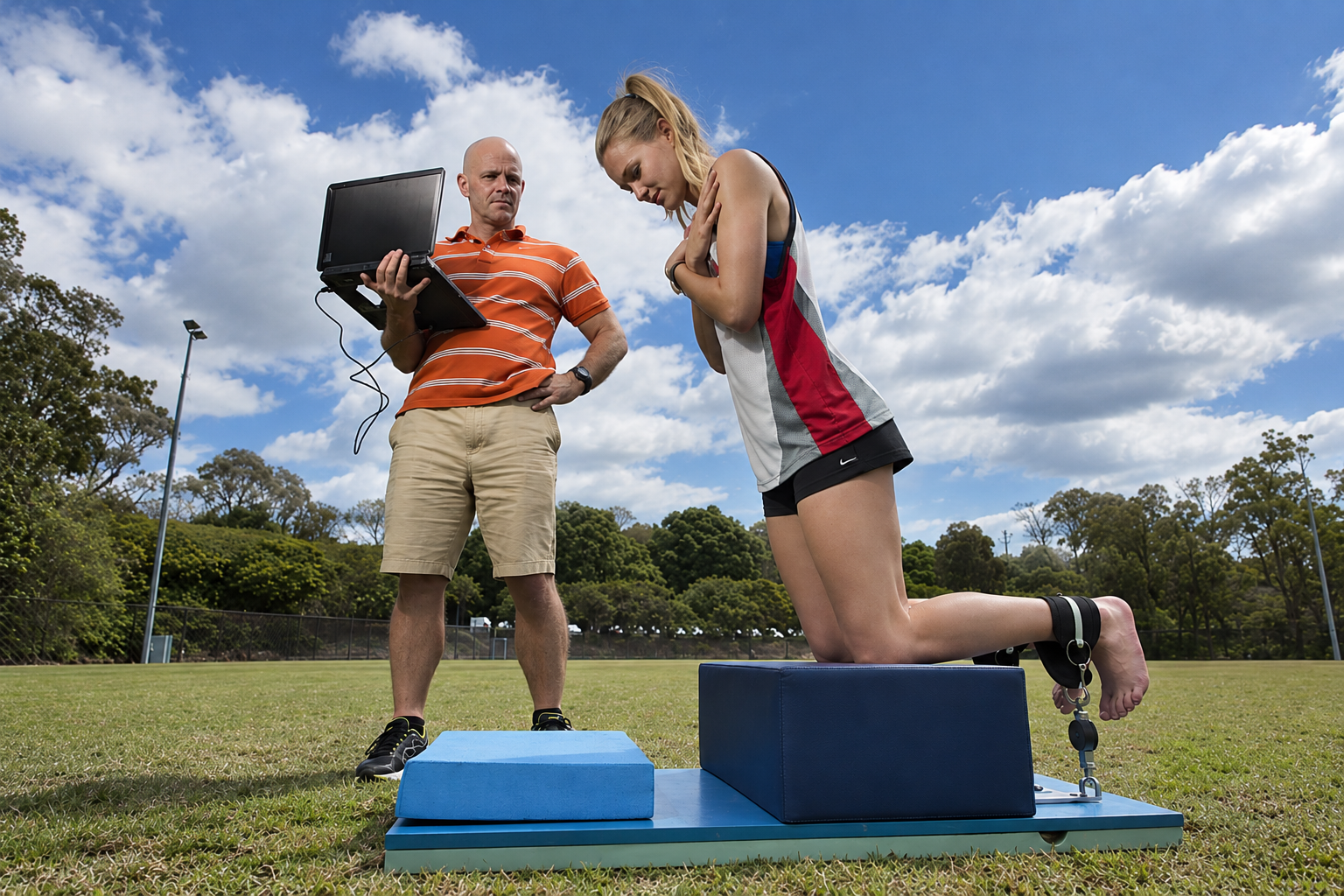
The original NordBord prototype being tested outdoors.
The research revealed that athletes who experienced a hamstring injury were often weaker in the previously injured leg. Leading them to do a larger study on 210 elite Australian footballers to test this further.
Though the device couldn’t predict injuries, it gave coaches and physiotherapists a much better tool to measure and reduce the risk factor.
A real business
Following their research, it was clear that there was demand for the product before it even existed.
Sam James, a mechanical engineering and industrial design student at QUT, saw the potential of turning this prototype into a real product.
So he brought in his best friend and roommate, Laurie Malone, who had studied law and finance and had been working as a lawyer for 5 years, and Chris Rowe as their first employee.
Together the three of them licensed the tech from QUT.
Starting VALD in January 2015.
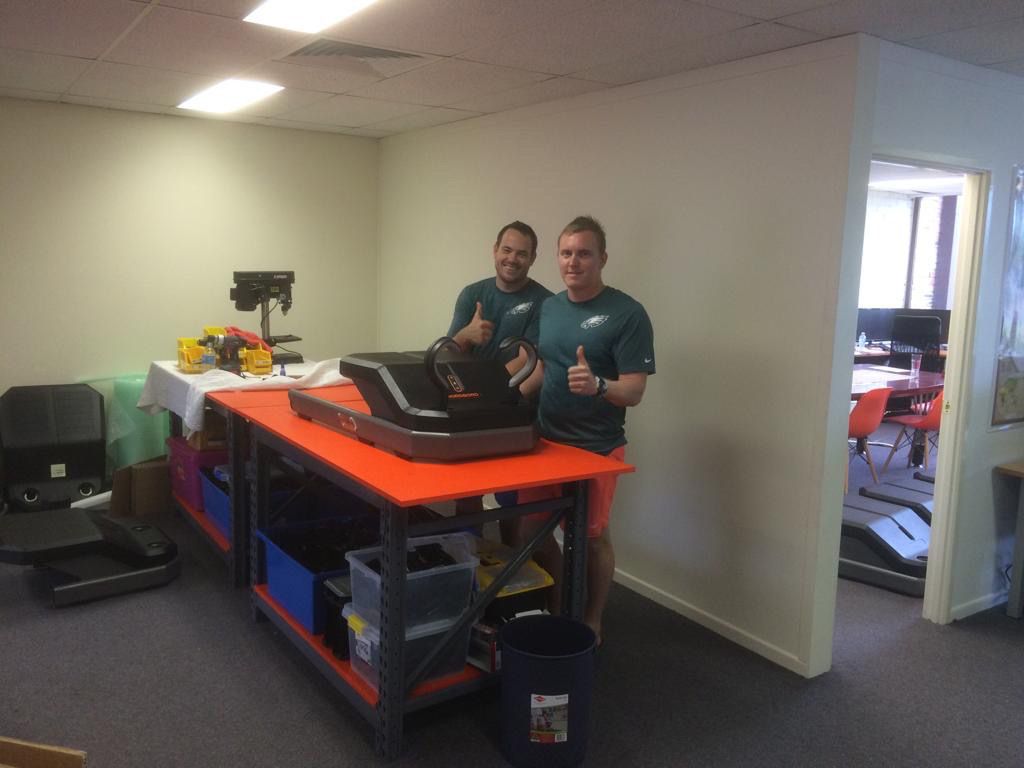
VALD co-founders Sam James and Laurie Malone in their first office.
The team of three spent a year recreating and redesigning, and officially in January 2016 they launched the NordBord.
Before the product had even been finished, there was already high demand. Of the first 10 NordBords, 5 of them went directly to English Premier League teams. With the AFL and the NRL both becoming early customers as well.
This validated VALD as a company, but it did mean they had to sell.
The three of them travelled around Europe and the U.S., attending conferences and staying at cheap hotels, selling it to everyone. Their sales approach was very honest. They told customers what it could and couldn’t do.
Geelong Football Club physiotherapist Mark Young told Sam:
“Don’t get caught up in bells and whistles. Remember what you’re good at: measuring strength.”
— Mark Young
And that stuck with them. Their honesty made them stand out. The customers trusted the product and the founders.
Leading them to spread across the world’s major sporting leagues.
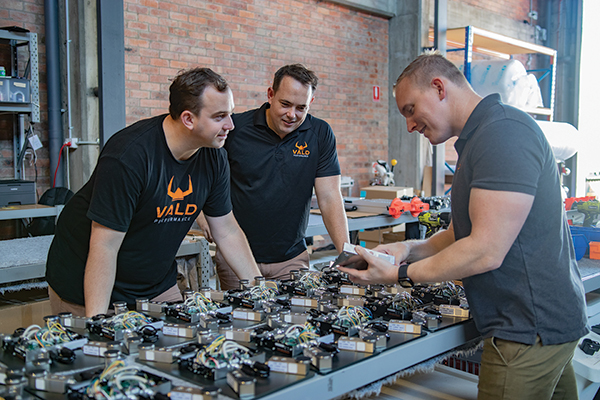
The VALD team building hardware in Brisbane.
One at a time
VALD didn’t rush to make 100 new products and create a full ecosystem. They stuck with what they were good at and slowly created products one at a time.
Soon they came up with ForceFrame, then HumanTrak, and acquired ForceDecks and added them to their catalogue.
By the beginning of 2018 they had sold more than 300 NordBords, done 105,000 individual tests and tested 26,000 athletes. VALD was already working with most of the Premier League, NBA, and NFL teams and AFL clubs.
This led them to a major problem.
The 20-team problem
When you think of the Premier League, there are only 20 teams. Which is a problem because there are only 20 people to sell to. This same problem applies to every single sporting competition.
There are roughly only 5,000 to 8,000 elite sporting organisations worldwide.
“We’re going to run out now, there’s no more English Premier League teams to sell to.”
— Sam
Which meant they had to pivot.
Everyone from a professional NFL player to a grandmother could use this technology. Because everyone can get these injuries.
All they had to do was sell to physiotherapy clinics, of which there are more than a million across the world. They just had to make the tech cheaper, smaller, and easier to use.
So they created VALD Hub. Now they weren’t just selling equipment; they were selling a platform. Then they started selling 3-year subscriptions for most products, which included physical devices, software, VALD Hub, training, support, warranties, repairs, and replacements. Creating a comprehensive package.
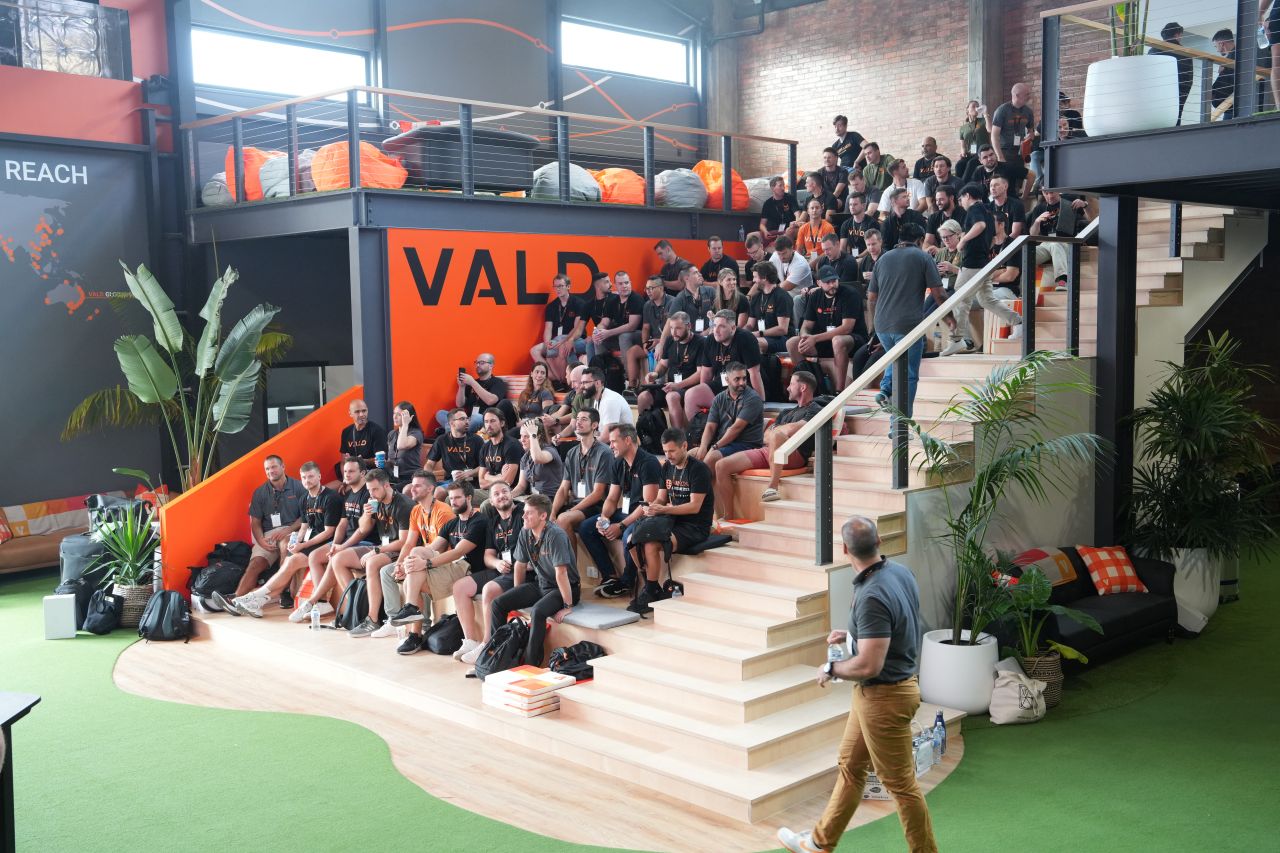
VALD team gathered at VALDcon 2023 in the Brisbane headquarters.
COVID-19 to Today
During COVID, VALD realised they needed to switch to more remote health infrastructure, creating Telehab and upgrading VALD Hub, accelerating their transition from just an equipment company into a software company.
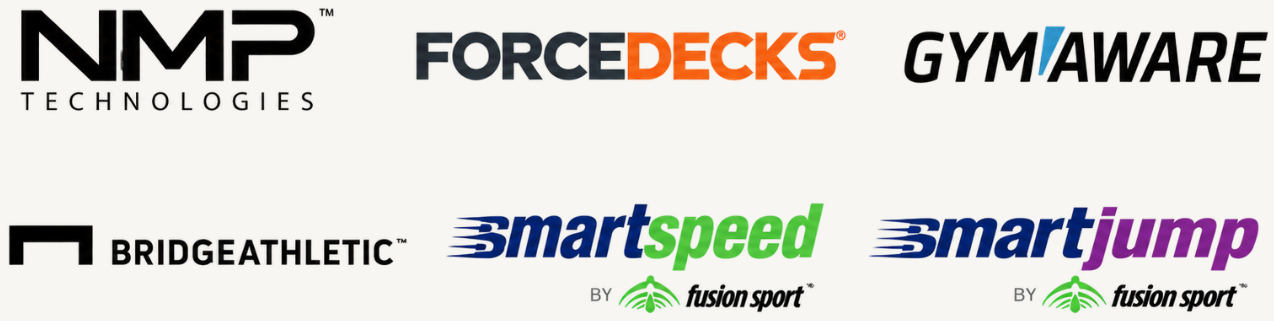
In the last five years, VALD has specifically been buying and acquiring more software and hardware companies to fold into their product suite, such as:
Today, VALD is in more than 8,000 organisations across 130 countries.
With more than 140,000 users and data on over 2 million athletes.
VALD is now roughly valued at A$1 billion.
Funding
VALD differs from most startups as, obviously, being more of a hardware brand, they couldn’t attract VC investment in 2015 as that wasn’t typical to invest in hardware.
For them what they prioritised was government grants, receiving over A$620,000 in grants. This allowed them to get the product off the ground and then become ‘revenue-led’. Where once they’ve made enough money, they can move on to the next product or the next acquisition.
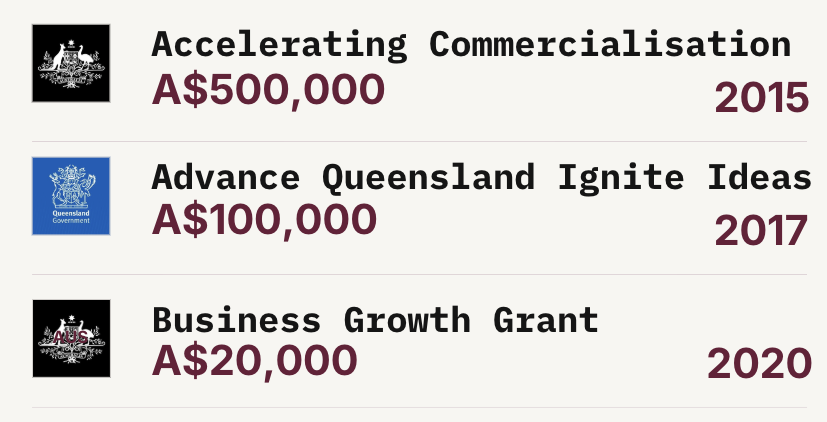
Investments
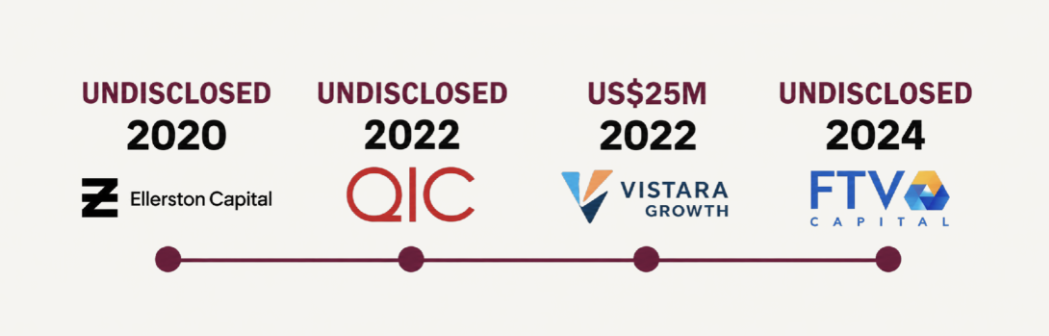
VALD has been invested in by a couple of different companies, but many of the investments have been kept private, as it is a private company. These investments have been to help with growth, with many of them expected to have taken equity.
The earliest possible time you could have invested in VALD would be 2015. Today, they may have been VC-backed because VCs are more likely to invest in hardware, but back in 2015, they were very unlikely to invest in hardware. This is because hardware has become more of a moat than software because of the introduction of AI.
The best time to have invested in VALD would have been in 2017 or 2018, once they had just started manufacturing the NordBord and five of their first boards had been shipped to Premier League teams. This validates their product and shows that it can be used at very high sporting levels.
Insights
Start with one — VALD started with one simple product and did it very well, and the revenue from that allowed them to build another and acquire.
Grants — Rather than raising and giving up equity to VCs, use grants as your seed round. Giving you cash and a valuation without equity.
Recurring revenue — turn a one-time purchase into a subscription. This increases your overall profit and also your valuation as a company.
- 01VALD company overviewVALD
- 02VALD Performance — from Brisbane share house to global sports techBrisbane Economic Development Agency
- 03New invention set to protect hamstrings around the worldQUT
- 04Original 2013 NordBord research paperPubMed
- 05From a garage to the Super BowlInDaily Queensland
- 06From the Sharehouse to the Penthouse, with co-founder Sam JamesASTN Podcast
- 07Why We Invested in VALDVistara Growth
- 08Vistara leads US$25 million financing for VALDVistara Growth
- 09Investment in VALD through the Business Investment FundQueensland Government
- 10VALD Performance company profileBrisbane Economic Development Agency
- 11Introducing SmartSpeed, VALD’s new timing gate systemVALD
- 12VALD acquires GymAwareVALD
- 13VALD acquires BridgeAthleticVALD